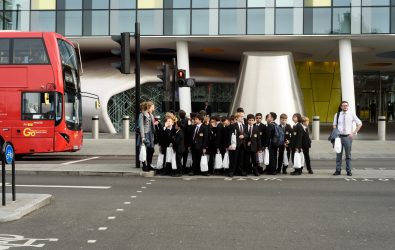
School uniforms have been a feature of English education since the 1550s and are deeply embedded in English culture. In contrast to some other Western countries, such as the US and Canada, uniforms are standard in most state-funded schools. They are commonly portrayed as a way to promote inclusion, by reducing visible difference between pupils and acting as a ‘social leveller’, and as helpful for reducing bullying and increasing focus on learning.
However, there is ongoing debate around whether uniform policies may unintentionally disadvantage lower-income families and whether legislation and guidance go far enough to make uniforms affordable. Increasing costs for families may contradict the egalitarian justification for uniforms – at least those for which parents must pay. Research emphasises the ‘unmanageable cost’ – currently an average of £442 for secondary uniform items – for many low-income families, particularly post pandemic. A large-scale 2025 survey of secondary pupils found that over a quarter of those on free school meals (FSM) missed school because they did not have something they needed to attend; about half of these stated it was due to missing uniform items. According to the same study, pupils eligible for FSM were more than twice as likely as their peers to be sent home for not having the right uniform or kit (eight v three per cent). This is noteworthy given the high rates of absence particularly amongst low-income pupils since the pandemic.
Policies which aim to promote equality or ‘sameness’ may also, in practice, disproportionately burden other vulnerable groups, including those with protected characteristics under the Equality Act 2010. For instance, the Hair Equality report highlights how vague or Eurocentric standards in uniform policies can lead to the policing of natural hair styles. Legal cases in recent years, for example a successful race discrimination claim against a London school that banned ‘Afro hair of excessive volume’, further demonstrate how uniform policies can fall short of inclusive practice. Children with special educational needs and disabilities, particularly those with sensory issues, may struggle to comply with school uniform policies. According to evidence provided to the Education Select Committee by the National Education Union and an ONS survey of pupils with SEND, uniform requirements and lack of flexibility around them can be a barrier to learning and attendance for these children.
Current government policy
Schools are required to consider health, safety and equality obligations under the Equality Act when designing uniform policies, and to follow the DfE’s Cost of Uniforms guidance, which states that they must ensure their uniform is affordable and avoid exclusive single-supplier contracts unless justified.
To additionally assist with rising costs, the Children’s Wellbeing and Schools Bill stipulates that from September 2026 secondary schools will be limited to four branded items of school uniform, including a tie, so that the remaining items can be bought more affordably from a broader range of retailers. The current version of the guidance has been in place for less than a school year. It remains to be seen if this will lead to change in uniform affordability.
Meanwhile school attendance and engagement remain priorities for the government with data showing worsening trends before and since the pandemic. The Prime Minister has recently announced the creation of a ‘Pupil Engagement Framework’ to support schools in ensuring pupils feel a sense of belonging in their schools.
Our approach
There has been limited systematic analysis of how schools in England currently write and enforce uniform policies. This blog begins to address this gap through an exploratory analysis of these policies in an initial sample of 16 state secondary schools in England.
To sample secondary schools with a range of pupil and school characteristics, we first sorted local authority areas using a publicly available measure of pupil behaviour and/or school approach to behaviour – the proportion of pupils suspended at least once – using data from Explore Education Statistics. We chose a range of schools in each local authority suspension rate quartile and ensured a mix of geographical, demographic and socioeconomic characteristics (see Figure 1).
Figure 1: Characteristics of secondary schools analysed
| Characteristic | Q1 (lowest suspension rate) |
Q2 | Q3 | Q4 (highest suspension rate) |
Total number of schools |
|---|---|---|---|---|---|
| Total schools analysed (local authority) | 4 (London) |
4 (East Midlands) |
4 (South West) |
4 (North East) |
16 |
| School type | |||||
| Academy | 3 | 4 | 3 | 3 | 13 |
| Free school | 1 | 1 | |||
| Maintained | 1 | 1 | 2 | ||
| Location | |||||
| Urban | 4 | 1 | 1 | 4 | 10 |
| Rural | 3 | 3 | 6 | ||
| Religious denomination | |||||
| Secular | 3 | 3 | 3 | 2 | 11 |
| Catholic | 1 | 1 | 2 | ||
| Church of England | 1 | 1 | 1 | 3 | |
| Gender mix | |||||
| Co-educational | 3 | 3 | 4 | 4 | 14 |
| Girls’ school | 1 | 1 | |||
| Boys’ school | 1 | 1 | |||
| School size | |||||
| 600-1,199 pupils (medium) | 3 | 3 | 3 | 1 | 10 |
| 1200+ pupils (large) | 1 | 1 | 1 | 3 | 6 |
| Free school meals | |||||
| 0-10% | 1 | 1 | 0 | 0 | 2 |
| 11-25% | 2 | 1 | 3 | 0 | 6 |
| 26-40% | 1 | 2 | 1 | 2 | 6 |
| 41+% | 0 | 0 | 0 | 2 | 2 |
| English as an additional language | |||||
| 0-5% | 0 | 2 | 1 | 2 | 5 |
| 0-20% | 1 | 1 | 3 | 2 | 7 |
| >21% | 3 | 1 | 0 | 0 | 4 |
We analysed each school’s publicly available uniform policy through content analysis to identify patterns and themes. More information on our approach and how it compares with the method used in the first instalment of this series, ‘Do behaviour policies matter?’, is available upon request.
We aimed to:
- Map variation in uniform policies: how do schools (1) explain or justify their approach to uniform, (2) address affordability, and (3) employ sanctions for breaches of their policies?
- Focus on inclusion: how do schools (1) balance ‘consistency’ with reasonable adjustments, (2) consider protected characteristics, including race, religion or belief, sex, and disability, as well as body diversity, and (3) display any policy-inclusion mismatch i.e. policies contain inclusive language or statements but specific rules (e.g. restrictive hair policies, lack of financial or SEND adjustments) may undermine that inclusion in practice?
What explanations do schools give for their uniform policies?
A range of reasons were given for schools’ approaches to their uniform policies (Figure 2). These included perceived benefits such as order and image. Schools also tended to link appearance of pupils to a collective identity reflecting the school ethos. For example: ‘[…]a consistent academy uniform policy is vital to promote the ethos of the academy and provide a sense of belonging and identity for all students, regardless of their protected characteristics or socio-economic circumstances.’ Additionally, schools often desired to project a positive image beyond the school gates, with pupils representing the school while in uniform, with one school stating: ‘Pupils are expected to be positive ambassadors for the school at all times. This includes when they are visible outside of the school in [school name] school uniform during school trips, work placement, sporting events and journeys to and from school.’ Some policies tied uniforms to academic performance, and justified them as a social leveller, despite a lack of empirical evidence supporting these justifications. Eleven of the 16 schools referred to the Equality Act.
Figure 2: Types of reasoning provided for uniform policies
| Factor / Theme | No. of schools |
|---|---|
| Pupil identity/belonging | 15 |
| Pupil safety | 14 |
| Pupil comfort or wellbeing | 14 |
| Learning or attainment | 11 |
| Fairness or equality | 14 |
| School identity and projected image | 14 |
| School values | 13 |
| Order and discipline | 14 |
| Refers to Equality Act 2010 | 11 |
| Social leveller | 6 |
| School environment | 6 |
Note: The ‘No. of schools’ column indicates how many schools (out of 16) included at least one reference for each item.
Overall, half of the 16 schools described engaging pupils, parents, or the wider school community in policy development. While descriptions were often brief, limiting insight into the extent to which pupils’ and parents’ views were taken into account, three schools were explicit about seeking views from pupils or families who were disadvantaged or with protected characteristics. Urban (six of ten) or secular schools in our sample (six of eleven) were more likely to be consultative than rural (two of six) or religious schools (two of five).
How did schools approach affordability in their policies?
Most schools, but not all, communicated in their policies that they wish to keep uniform costs low for families (Figure 3). This was especially evident in the LA quartile with the highest suspension rate – also one of the most deprived areas of England. It was additionally seen more in schools with more than ten per cent of pupils on free school meals. Ten of the 16 schools referred to DfE guidance for schools on the cost of uniforms.
Figure 3: Number of references to uniform affordability measures
| Action / Factor | No. of schools |
|---|---|
| Commitment to affordability | 13 |
| Other cost-saving actions* | 13 |
| Second-hand/reuse scheme mentioned | 13 |
| Minimal branded items commitment | 11 |
| Financial support available | 10 |
| Uniform longevity | 10 |
| Refers to the Department for Education’s (DfE) ‘Cost of school uniforms’ guidance | 10 |
Note: The ‘No. of schools’ column indicates how many schools (out of 16) included at least one reference for each item * e.g. supplier negotiations; simplifying designs; avoiding specific requirements for items pupils can wear on non-school days like shoes/coats
This commitment sometimes translated into action through measures to support affordability, such as financial support via pupil premium funds or grants, and second-hand schemes. However, these were not universal, and some schools did not specify that they provide any support. Urban schools in our sample (eight of ten) were more likely to provide financial support compared with rural schools (three of six).
Just five of the 16 schools were upfront about uniform costs by listing them within their policies. Only four of the 16 schools used two or more suppliers in line with DfE guidance; according to one of these schools this was ‘to ensure no firm can monopolise cost.’ Some schools’ policies stated commitments to limiting the number of branded items required, yet this was not always reflected in the actual number of branded items schools listed, which ranged from two to seven items.
What disciplinary consequences are given for uniform breaches?
Disciplinary consequences for uniform breaches varied across the schools, ranging from minor corrective actions to suspension or exclusion in one school. The analysis identified:
- Mild consequences (thirteen schools) – including confiscation, parents or carers being notified, school providing or loaning correct items, or warnings.
- Moderate consequences (thirteen schools) – including detention, isolation or removal from class, loss of privileges, being sent home
- Severe consequences (four schools) – suspension or exclusion
All but one school described a graduated response system in their broader behaviour policy where increasing or repeated breaches led to more serious disciplinary consequences. While severe sanctions were more commonly linked to persistent misbehaviour generally, uniform breaches were occasionally directly cited as grounds for suspension or exclusion. For example, one school behaviour policy stated: ‘students may be suspended for: A breach of the dress code, serious disruption, smoking or vaping, carrying offensive items, being under the influence of alcohol or illegal drugs, minor theft and vandalism, physical aggression and bullying[…].’
How inclusive are school uniform policies?
Many policies contained elements of both what could be termed ‘inclusive’ and ‘strict’ or ‘high expectation’ approaches. Policies or aspects of policies which we deemed more on the inclusive side acknowledged a responsibility to accommodate pupils with protected characteristics or from disadvantaged socio-economic backgrounds. These often embedded flexibility, offered adjustments, or explicitly referenced fairness and accessibility. Policies which were more strict or ‘high expectation’ were more rule-driven and standardised, with an emphasis on pupils adapting to institutional norms. While some also included flexibility and accommodations within their policies, this was less present than in other schools’ policies, and they instead had a larger focus on consistency, conformity, and the enforcement of high appearance standards. Here, ‘consistency’ tended to be framed as uniform rule enforcement taking priority over equitable flexibility, potentially disadvantaging pupils who require adjustments.
15 schools referenced at least some form of inclusivity in their policies. The remaining school, a Catholic boys’ school, was an outlier with no inclusive language or reasonable adjustments. Another school with one of the most inclusive policies, including being the only school to adopt the Halo Code, a pledge that prohibits hair discrimination, stated: ‘[We] recognise that hair style and texture has no bearing on ability to succeed.’ A further school followed the Equality and Human Rights Commission guidance on ‘Preventing hair discrimination in schools.’ Otherwise, schools overwhelmingly stated pupils should have ‘no extreme hair styles’ or used similar language of negative connotations, which may disproportionately impact certain racial or ethnic groups without clear justification. EHRC guidance explicitly advises against using words like ‘extreme’ to describe hairstyles.
Reasonable adjustments were relatively well embedded across schools (see Figure 4). Nine out of ten urban schools made accommodations for religious or cultural reasons, while half of the six rural schools did so. Secular schools in our sample tended to consider gender equity and cultural/religious accommodations more than religious schools, which were split.
Most policies (14 of 16) included reference to measures embedded into the policy design from the outset which anticipated diverse needs, while also referencing support or flexibility conditional on parents raising issues to the school. Regarding the former, for example, policies included gender-neutral uniform options, financial support schemes, and considered universal design for SEND accommodations: ‘the school ensures that the needs of pupils with SEND and/or sensory difficulties are considered in the uniform policy, e.g. ensuring soft, stretchy fabrics and avoiding intricate buttons or hard seams. However, in other cases, the onus was put on parents: ‘The college recognises that there may be instances where students may not have full college uniform. There will be an expectation in this case for parents to inform the college of any problems and when they might be resolved.’ Only one school had considered pupils’ body shape or size in their uniform policy, reflecting that uniforms may hinder the ability or confidence of children to be physically active through the day which could potentially disadvantage more overweight pupils.
While many policies displayed inclusive statements or acknowledged the importance of accommodating diverse needs, some also displayed what could be described as a policy–inclusion mismatch. This refers to cases where the policy language affirmed inclusivity, but the specific rules or provisions seemed unlikely to substantiate or enable it in practice. For example, policies sometimes stated that all pupils are welcome and supported, yet simultaneously restricted hairstyles without justification, or provided no mention of financial support or reasonable adjustments. This policy-inclusion mismatch was seen across ten schools. These were the same ten schools that had engaged in consultation with pupils and parents/guardians, suggesting that while consultation may help develop a policy with language that appears inclusive, either this doesn’t carry through to the whole policy, or perhaps the consultation was more tokenistic. Policy-inclusion mismatch was more likely in schools with higher percentages (over 25 per cent) of FSM-eligible pupils (six of eight).
| Factor / Theme | No. of schools |
|---|---|
| Support for pupil diversity and needs | |
| Reasonable adjustments | 14 |
| Religious or cultural accommodations | 13 |
| SEND consideration | 12 |
| Explicit gender equity | 10 |
| Body shape/size considered | 1 |
| Inclusion practices | |
| Inclusive statements/measures | 15 |
| School responsibility (policy-embedded)* | 14 |
| Pupil/family responsibility** | 14 |
| Potential inequities or non-inclusive language | |
| Implicit equity risks*** | 14 |
| Gender-specific references or inferences | 12 |
| Bans on ‘extreme’ hairstyles | 10 |
Note: The ‘No. of schools’ column indicates how many schools (out of 16) included at least one reference for each item
* e.g. universal uniform design accommodating SEND needs; “…embrace all hairstyles associated with [pupils’] racial, ethnic and cultural identities.”
** ad hoc amendments e.g. request parents or pupils get in touch to discuss uniform adjustments for cultural or disability reasons
*** seemingly neutral policy features that may have unequal impacts or burden on certain groups
What are the key takeaways from this analysis?
While the analysed schools varied in their approaches to uniform, all strongly emphasised projecting a specific identity or image, with many policies justifying uniform in terms of school reputation or professionalism. While this can align with values of pride and belonging, it may also encourage a form of ‘symbolic’ inclusion, where inclusive language is part of a school’s image, but not always matched by equitable disciplinary practice.
There were clear examples of inclusive approaches which embed actions to reduce disproportionate impacts on pupils with protected characteristics or those facing socioeconomic disadvantage – but this was not the case in all sampled schools. This raises questions about links between approaches to uniform, and a sense of belonging, engagement in, and attendance at school for certain pupil groups. These inclusive approaches could be emulated more widely, particularly when combined with meaningful consultation tailored to the needs of individual school communities and potentially help to support engagement and attendance amongst all pupils.
While this early analysis looks at just 16 schools, it highlights variation and contradictions in uniform policies both across and within schools. It suggests that in some cases these policies may contribute to exclusionary practices, and that they might actively undermine pupils’ access to education and sense of belonging. Further analysis should look to explore the patterns highlighted here at a larger scale.
Government and schools should consider how policies can be improved to ensure that wider inclusion issues are tackled, including enabling pupils to engage in physical activity. Focus on new initiatives such as school mental health leads to help pupils feel more engaged and supported should not replace consideration of the impact of existing school practices which put disproportionate pressure on some groups of young people and their families.